
Current State of the UAE Real Estate Market: 2025 Insights into the UAE Property Market

Overview of the UAE Real Estate Market in 2025
The UAE real estate market started 2025 with record momentum. In Q1, Dubai recorded nearly 58,000 deals worth AED 142 billion, representing a 31.5% rise in volume and a 16.2% increase in value from the start of 2024 (Dubai Land Department, Top Luxury Property). Alternate reports cite 42,000–45,000 deals valued at AED 114–142 billion, but all confirm strong growth (Gulf News).
Across the UAE, total property activity reached AED 239 billion across 95,000 transactions in five emirates, with Abu Dhabi contributing AED 25.3 billion from 3,819 deals, a 34.5% annual increase (RAK Chamber, Abu Dhabi Media Office).
The luxury segment remains a global draw, with 3,700+ Dubai sales above AED 10 million in H1 2025, a 62.7% jump over 2024, putting it on par with London and New York (LinkedIn Market Report).
In short, the UAE property market thrives in 2025, blending record activity and investor inflows with cautious attention to affordability and future supply.
Dubai & Abu Dhabi Property Market Trends
Dubai continues to dominate UAE real estate, with momentum driven less by overall transaction volume and more by the luxury and off-plan surge. Investor appetite for branded residences and long-term lifestyle projects keeps demand at record highs, supported by residency-linked incentives.
Abu Dhabi, meanwhile, shows a different profile: steady, government-backed growth. Affordable housing initiatives and policy stability attract long-term residents and institutional buyers, offering a contrast to Dubai’s rapid luxury-driven gains.
Key takeaway: Dubai in 2025 reflects high-value, fast-moving demand in prime and off-plan sectors, while Abu Dhabi offers consistent, policy-led expansion. Together, they balance the UAE property market with both short-term momentum and long-term stability.
Rental Market & Yields in the UAE Property Market
Dubai: High Returns with Strategic Selection
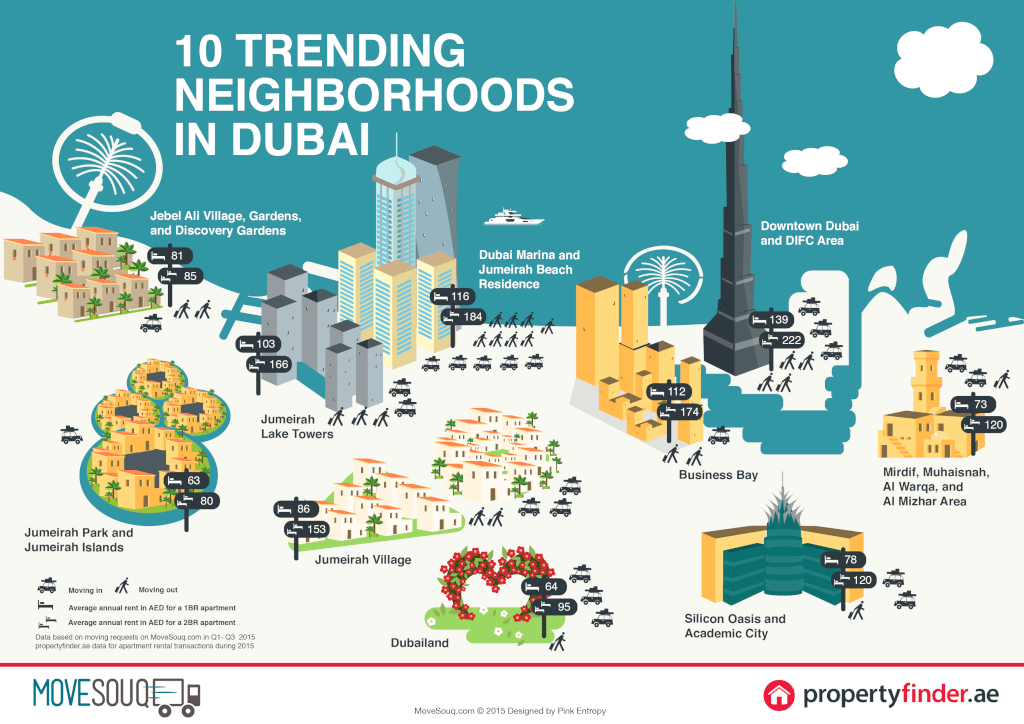
Dubai’s rental market in 2025 continues to offer attractive yields, particularly in select communities. The average gross rental yield stands at approximately 6.31%, surpassing many developed markets worldwide (Wise). Top-performing areas include:
- Dubai Silicon Oasis: Leading with an annual return of 9.29%, driven by its thriving tech ecosystem and strategic location.
- Jumeirah Village Circle (JVC): Offers returns of 8.64%, known for its balanced lifestyle and modern amenities.
- Dubai Production City: Emerging as a significant investment hub with capital gains of 8.29%, attributed to ongoing infrastructure projects and commercial developments.
Conversely, areas like Downtown Dubai and Dubai Marina have seen slight declines in rental yields, with figures ranging between 4.5% and 5.5%, reflecting the high property values and demand saturation.
Abu Dhabi: Steady Growth with Attractive Yields
Abu Dhabi’s rental market remains robust, offering competitive yields amidst a steady growth trajectory. The average gross rental yield is approximately 5.9% to 6.3%, with apartments in communities like Al Reef delivering yields up to 9.3% (What’s On).
Notable areas include:
- Masdar City: Achieving yields of 8.4%, appealing to eco-conscious investors.
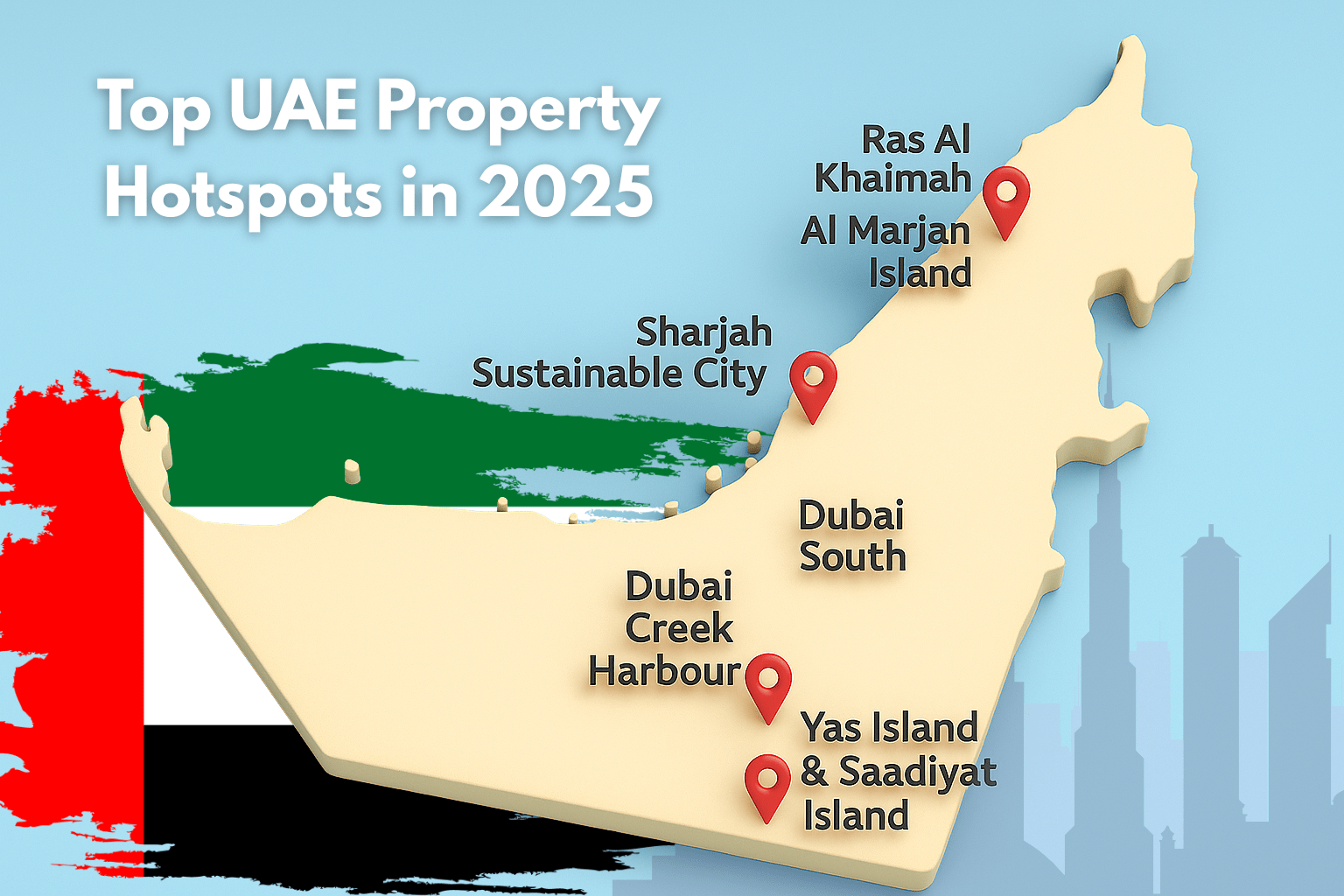
- Yas Island: Providing steady returns above 7%, maintaining its status as a desirable location.
- Khalifa City and Hydra Village: Offering yields over 6%, making them solid bets for long-term investors.
Despite a slower pace in new unit deliveries, with only 7.1% of the 2025 pipeline completed in H1, demand remains strong, especially in established communities.
Government Policies Shaping the UAE Real Estate Market
Government reforms in 2025–2026 are reshaping the UAE real estate market, affecting demand, ownership, and development priorities.
1. UAE Golden Visa & Property-Linked Residency
The Golden Visa allows investors purchasing properties above a certain value to gain 5–10 year renewable residency, turning real estate into both an asset and a residency solution.
Impact:
- Over 12,000 investors used property-linked Golden Visas in 2025.
- Dubai and Abu Dhabi saw 10–15% increases in high-value property sales tied to Golden Visa eligibility, especially in luxury and branded residences.
- Longer holding periods are reducing speculative flipping and stabilizing transactions.
2. Foreign Ownership Reforms
Expats now enjoy broader rights to purchase freehold properties across multiple emirates, boosting international investment confidence.
- Foreign buyers contributed 28% of total Q1 2025 sales in Dubai (Dubai Land Department).
- Simplified registration and digital platforms have made investing faster and more transparent.
3. Sustainability & Net-Zero 2050
Sustainability is now central to the UAE property market. Developers are adopting energy-efficient systems, green building certifications, and low-carbon construction.
Market Effects:
- Green-certified properties fetch 3–5% higher rental premiums and sell faster.
- Incentives like reduced fees and expedited approvals accelerate UAE sustainable property development (Masdar City Sustainability).
Emerging Trends in the UAE Property Market 2025
The UAE property market is evolving fast, driven by luxury demand, technology, and sustainability, shaping buyer behaviour and developer strategies.
Luxury & Branded Residences
High-net-worth buyers continue to favor luxury and branded residences in Dubai. Over 3,700 homes sold above AED 10 million in H1 2025, a 62.7% rise from 2024 (LinkedIn report). Branded residences like Ritz-Carlton, Bulgari, and Armani attract investors seeking status, lifestyle, and guaranteed service quality, especially in Downtown Dubai, Palm Jumeirah, and Business Bay.
Tech-Driven Sales & Digital Experiences
Technology is transforming the buyer journey:
- AI chatbots and virtual assistants pre-qualify leads, schedule viewings, and provide personalized recommendations.
- Virtual tours and AR staging enable remote property exploration for international investors.
- Digital platforms streamline contracts, escrow, and payments, boosting confidence and efficiency.
Watch how AI-powered tools are transforming real estate lead generation in the UAE:
Sustainable & Green Developments
Sustainability is now central to development:
- Green-certified properties enjoy 3–5% higher rental yields and faster sales.
- Projects like Masdar City and sustainable Dubai waterfront communities set benchmarks for eco-conscious living.
- Analysts predict growth in eco-friendly segments over the next 3–5 years.
Outlook: What’s Next for the UAE Property Market?
The UAE real estate market is poised for steady growth, shaped by policy, technology, sustainability, and investor behavior. Key factors include:
Continued Investor Confidence
- Political stability, tax advantages, and transparent regulations keep local and international investors engaged.
- Dubai and Abu Dhabi see strong foreign buyer activity, particularly from Europe, India, and China, supporting 5–7% annual growth in prime segments (Property Finder Market Watch).
Policy Support and Residency Incentives
- Golden Visa and property-linked residency encourage long-term investment, especially in mid-tier and luxury sectors.
- Clear regulations on foreign ownership, rent caps, and sustainability boost buyer confidence.
Tech-Driven Real Estate
- AI tools, virtual tours, and digital transactions continue to reshape buyer experiences.
- Proptech solutions help developers optimize marketing, forecast demand, and streamline sales, giving early adopters a competitive edge.
Sustainability and Green Development
- Eco-friendly, energy-efficient, and net-zero buildings are influencing project design and marketing.
- Green-certified properties attract higher rental yields and faster sales, aligning with policy and buyer preferences (Masdar City Sustainability).
Strategic Takeaways for Investors and Developers
- Focus on prime and branded residences for high-value returns.
- Monitor mid-market segments for affordability pressure and potential oversupply.
- Leverage technology and Proptech for efficiency and market insights.
- Prioritize sustainable developments to meet policy and market demand.
Conclusion
The UAE real estate market in 2025 has shown remarkable resilience, with strong transaction volumes, rising property values, and growing investor confidence across Dubai, Abu Dhabi, and other emirates. The UAE property market continues to evolve, shaped by government policies, technology adoption, and sustainability trends.
For developers, investors, and agents, the key takeaway is clear: staying informed about market shifts, leveraging digital tools, and aligning projects with long-term policy and sustainability trends is essential. Strategic, data-driven decisions will be critical to maximizing returns in the UAE real estate market.
Stay ahead in the UAE property market. Leverage Eumentis AI to qualify leads instantly, predict demand, and maximize returns on luxury and mid-market investments.


