
Conversational AI & Virtual Tools: Evolving Real Estate for the Modern Market


A New Era of Real Estate Sales
For years, real estate sales depended on phone calls, site visits, and face-to-face conversations. Buyers waited for agents to respond. Agents relied on instinct and manual follow-ups. It worked—but only because expectations were low and competition moved slowly.
That world is gone.
Today’s buyers want clarity fast. They search online, compare dozens of listings, and expect instant replies before committing even a minute of their time. When someone enquires about a property in Dubai or Abu Dhabi, they want answers now—not in a few hours, and definitely not the next day.
This shift is why conversational AI real estate tools and virtual real estate tools have become essential. They bridge the gap between the speed buyers expect and the workload agents can realistically handle. Whether it’s an AI assistant replying on WhatsApp, a virtual tour replacing an in-person visit, or automated follow-ups keeping a buyer engaged, the sales journey is no longer built around manual effort—it’s built around smart, responsive technology.
Real estate has evolved. The buyer journey has changed. And the agents who adapt to conversational AI and virtual tools will be the ones who stay ahead as the market moves faster than ever. virtual tools will be the ones who stay ahead as the market moves faster than ever.
How Buyer Behaviour Has Changed
If you’ve worked in real estate long enough, you can probably feel it: buyers don’t behave the way they used to.
There was a time when someone would wait days for an agent to call back, walk through half the city in a weekend, and trust whatever information they were given. Today? Not a chance.
Buyers have gone fully digital—and fully impatient.
They scroll through listings at midnight. They compare ten properties before breakfast. They expect the right details, not generic responses. And if an agent doesn’t reply fast enough, they simply tap the next listing and move on. This shift is exactly why AI in real estate sales has become unavoidable.
The modern buyer wants:
Instant answers
If a WhatsApp message isn’t acknowledged within minutes, the conversation is over. This is where conversational AI real estate tools shine—they reply immediately, every time.
Transparency
Buyers want accurate details, pricing clarity, and virtual access to the property. This is why virtual real estate tools—from 3D tours to digital staging—have become part of the standard search process.
Frictionless scheduling
No one wants five back-and-forth messages to book a visit. A simple automated link that schedules a slot wins every time.
Remote confidence
Especially in the UAE, where so many buyers live overseas. They want to “experience” the property before investing—often without flying in.
Buyer expectations changed first. Real estate teams are now catching up—not with more manual work, but with smarter tools that match the pace of today’s decision-making.
The Rise of Conversational AI in Real Estate
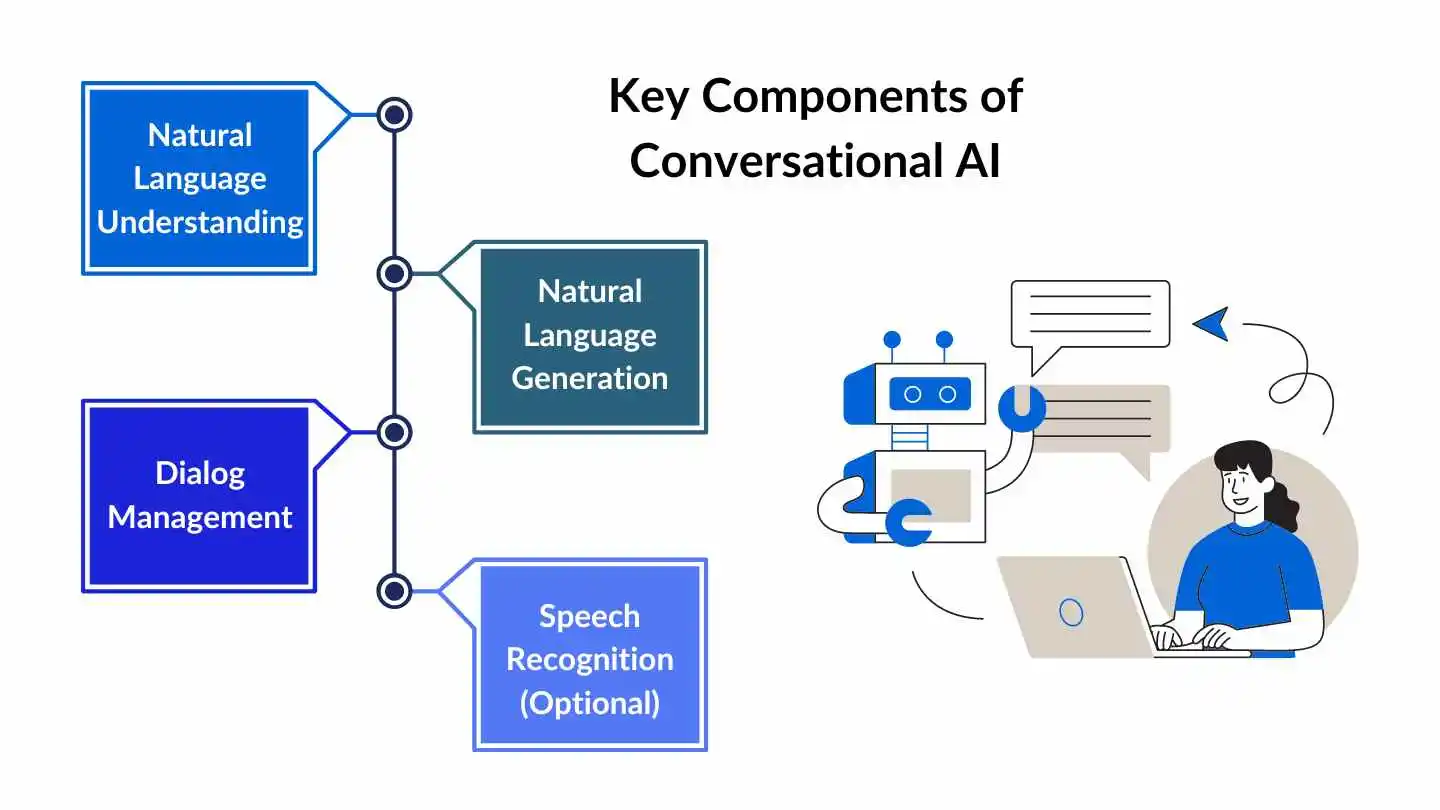
A few years ago, the idea of an AI assistant helping buyers felt like a tech experiment. Today, it’s one of the biggest shifts in how real estate sales begin. With buyers expecting instant replies and on-demand information, conversational AI has become a core part of modern property journeys.
When a lead enquires, conversational AI in real estate steps in immediately. It answers questions, shares photos, floor plans, and community details, checks availability, and even books viewing appointments—all within seconds. What used to take agents hours now happens automatically and without delay.
Instead of long response gaps or missed leads, AI real estate assistants keep conversations alive around the clock. They qualify leads, send follow-ups, and guide buyers until they’re ready to speak with a human agent.
Here’s what conversational AI handles smoothly:
- Answers FAQs: prices, sizes, locations, amenities
- Sends brochures, listings, images, and virtual tours
- Checks buyer intent: budget, timeline, preferences
- Schedules viewing appointments automatically
- Follows up without forgetting or dropping leads
For agents, this shift means fewer repetitive tasks and more time spent closing real, serious prospects. For buyers, it means an experience that feels fast, personal, and always available.
This is why AI in real estate sales is no longer optional—it’s the new starting point for nearly every property conversation.
Virtual Tools Reshaping the Sales Journey
Alongside conversational AI, virtual tools have changed the way buyers explore properties. Instead of relying on photos or visiting multiple locations in a day, buyers now move through homes digitally—often before they ever speak with an agent.
This shift started gradually but has quickly become a standard expectation. With virtual real estate tools, buyers want to see, compare, and understand a property without any friction.
Virtual Tours as the New First Viewing
A simple link can now replace a physical visit.
Real estate virtual tours give buyers a full 360° view of each room, showing scale, lighting, and flow in a way photos never could.
They help buyers:
- Understand space and proportions
- Compare multiple units in minutes
- Experience the property remotely
- Filter which homes they want to see in person
For overseas buyers in the UAE, this has become essential. Many make shortlists—or even decisions—before they land in Dubai.
Digital Staging & Visualization
Empty rooms can be hard to imagine. Virtual staging solves this instantly by showing how a unit looks with furniture, décor, or different interior styles.
It helps buyers visualize:
- Layout possibilities
- Furnishing styles
- Design upgrades
- Room functionality
This reduces hesitation and speeds up decisions, especially for off-plan units.
Self-Guided Online Property Journeys
Buyers want to explore on their own terms.
Virtual tools now offer:
- Interactive floor plans
- Amenity previews
- Community maps
- Payment plan simulators
These features create a complete digital experience before any agent involvement.
Virtual tools don’t replace human agents—they prepare buyers better, increase their confidence, and make every in-person conversation more meaningful.

Why Agents Can’t Rely on Manual Sales Processes Anymore
For years, real estate agents built their entire workflow on manual effort—calling leads one by one, sending follow-up messages, scheduling viewings, and tracking prospects in scattered spreadsheets. It worked when the market moved slowly. It doesn’t work anymore.
Buyers today move faster, expect instant answers, and won’t wait for an agent to “call back later.” And in competitive markets like the UAE, this delay costs deals.
Manual Work Creates Gaps Agents Can’t Control
Even the most organised agent can’t:
- Respond to every lead instantly
- Follow up consistently across channels
- Track conversations across portals, WhatsApp, and email
- Remember every reminder, every appointment, every client detail
These gaps turn into missed viewings, cold leads, and lost sales.
Digital Buyers Expect Digital Speed
A buyer who enquires online expects:
- Immediate replies
- Clear information
- Easy scheduling
- A seamless experience
If they don’t get it, they move on to the next listing. Conversational AI and virtual real estate tools work because they remove this friction entirely.
Competition Has Become Too Strong for Manual Workflows
Developers and brokerages in the UAE are already using:
- AI pre-qualification
- Automated follow-ups
- Real estate virtual tours
- Instant appointment scheduling tools
Agents who rely only on manual workflows are competing against teams operating at 10x their speed and consistency. It’s simply not a fair fight.
Manual ≠ Personal, Automated ≠ Robotic.
A big myth in real estate is that automation removes the “human touch.”
In reality:
- AI handles the repetitive work
- Agents handle the relationships
Automation clears the noise so agents can focus where they matter most—negotiation, trust-building, and closing deals.
How Conversational AI and Virtual Tools Work Together as One Sales Engine
The biggest shift in modern real estate isn’t that agents are using new tools — it’s that these tools now work together. Conversational AI, real estate virtual tours, automated scheduling, and CRM workflows form a single engine that guides a buyer from first click to closing.
In older sales models, each step was disconnected. A lead would enquire on a portal, wait hours for a reply, go back-and-forth to confirm a viewing, and often drop off before ever seeing the property.
Today, AI closes those gaps instantly.
Instant Engagement the Moment a Lead Enquires
A buyer submits a form. Within 2–3 seconds, conversational AI replies with details, questions, and options. No waiting. No missed opportunity.
This alone increases conversion rates dramatically because modern buyers respond best to speed.
Pre-Qualification Without Human Effort
The AI checks:
- Budget
- Preferred location
- Unit size
- Readiness to buy
- Financing status
By the time the agent sees the lead, the heavy lifting is done. Instead of chasing 50 unqualified prospects, they focus on the 10 that matter.
Virtual Tools Show the Property Before the Visit
Once a lead is qualified, the real estate virtual tour link is shared automatically.
Buyers can:
- Walk through units
- Explore views
- Check floor plans
- Compare interiors
Agents report that virtual viewings remove early-stage hesitation, making physical visits far more serious and efficient.
Automated Scheduling Books the Viewing
If the buyer wants to visit in person, AI sends a booking link synced with the agent’s calendar.
The system:
- Confirms availability
- Sends reminders
- Adjusts timing when needed
Agents stop playing phone-tag. Buyers get clarity and convenience.
Continuous Lead Touchpoints Until Conversion
Between viewing and decision, AI keeps the relationship warm:
- Follow-ups
- Payment plan details
- Unit availability updates
This AI lead engagement ensures no lead “goes cold” simply because life got busy.
The Result: A Seamless, High-Conversion Sales Pipeline
Instead of juggling five disconnected tools, agents get one connected engine that:
- Engages faster
- Qualifies smarter
- Shows properties instantly
- Books viewings without friction
- Nurtures leads consistently
Conversational AI and virtual real estate tools don’t replace agents — they upgrade the entire sales process around them.
The Future of Real Estate Sales: AI + Virtual Tools Beyond 2025
If the last five years reshaped real estate, the next five will redefine it completely. The early phase of real estate chatbot adoption, real estate virtual tours, and automated scheduling was just the warm-up. What’s coming next is a fully connected, intelligent sales ecosystem that works around buyers — not the other way around.
Hyper-Personalized Buyer Journeys
Buyers will no longer browse standard listings.
Conversational AI will learn preferences over time — budget patterns, lifestyle choices, neighbourhood behaviour, even architectural taste.
This means the system can recommend properties the way Netflix recommends shows: naturally, accurately, and with context.
AI + VR/AR = Immersive Buying From Anywhere
Virtual tools will evolve far beyond 360° tours. Buyers will use AR to:
- Place furniture
- Test interior themes
- Preview renovation ideas
- Compare units across developers in real time
This removes uncertainty and accelerates decision-making — especially for overseas buyers, who already make up a large chunk of UAE real estate sales.
Predictive Sales Pipelines
Predictive models will become indispensable. AI will forecast:
- Which leads are closest to conversion
- Which units will sell first
- What pricing trends to expect
- How demand shifts across communities
Agents won’t just react to the market — they’ll anticipate it.
Fully Automated Transaction Pathways
The future isn’t just automated lead engagement — it’s automated closing.
Expect:
- Digital KYC
- Instant escrow initiation
- Smart-contract-enabled agreements
- Automated payment schedules
The friction that slows down deals today will disappear.
From Agents to “AI-Powered Advisors”
AI won’t replace agents — it will elevate the ones who adopt it.
Top performers in 2026 and beyond will be the agents who use:
- AI for property matching
- VR for immersive showcasing
- Automated follow-ups for consistency
- Predictive analytics for decision-making
The human role shifts from chasing leads to guiding buyers through high-value decisions.
The Bottom Line
Real estate sales are moving toward a future where:
- Every buyer journey is personalized
- Every lead is nurtured automatically
- Every property can be explored instantly
- Every decision is data-backed
Conversational AI and virtual tools won’t just support the sales cycle — they will become the sales cycle.
Conclusion
Real estate has evolved from a paperwork-heavy, follow-up-driven industry into a fast, intelligent, tech-enabled ecosystem. Conversational AI handles early buyer interactions with precision, real estate chatbots guide prospects in real time, and real estate virtual tours remove physical barriers from the buying process. Together, they’ve reshaped how properties are discovered, evaluated, and sold.
Those who adopt these tools early will be the ones who build trust faster, close deals sooner, and stay competitive in a market that rewards speed and intelligence.
If you’re ready to integrate AI calling, conversational AI, WhatsApp automation, or immersive digital tools into your sales workflow, Eumentis can help you make the shift.


